
Miss it, and the rules change fast. Unlike the annual Medicare Advantage and Part D enrollment period every October, there's no do-over here. Insurers can medically underwrite your application, charge higher premiums, or deny coverage outright.
This guide walks through when the Medigap Open Enrollment Period happens, how timing shifts based on your personal situation, what happens if you miss it, and how to apply so your coverage starts without a gap.
Key Takeaways
- Medigap Open Enrollment is a one-time six-month window, unlike annual Medicare enrollment periods
- It starts your first month at 65+ with Part B, regardless of when Part A began
- Insurers must accept you during this window, regardless of pre-existing conditions
- Missing it risks underwriting, higher costs, or denial, with few state exceptions
- Applying 1-3 months before your Part B effective date avoids coverage gaps
Why Timing Matters for Medigap Open Enrollment
Most insurance products let you shop around anytime. Medigap doesn't work that way. Your eligibility and your price are locked to a narrow window, which makes timing the biggest factor in what you'll pay and whether you'll get coverage at all.
During the Open Enrollment Period, insurers must:
- Accept your application regardless of health history
- Skip medical underwriting entirely
- Charge you the same premium as a healthy applicant of the same age
Outside that window, these protections disappear in most states. A chronic condition diagnosed even a few months after your 65th birthday could make coverage unaffordable, or unavailable, down the road.
Insurers can impose up to a six-month waiting period for pre-existing conditions if you apply outside the window. But if you had at least six months of continuous prior creditable coverage, such as an employer plan, COBRA, or Medicaid, with no gap longer than 63 days, that waiting period shrinks or disappears entirely.
The Real Financial Stakes
Medigap isn't a niche product. As of 2023, 43% of traditional Medicare beneficiaries, or 12.2 million people, carried Medigap coverage, according to KFF. Enrollment and pricing vary dramatically by state:
| Metric | Low | High |
|---|---|---|
| Enrollment rate | 9% (Hawaii) | 67% (Iowa) |
| Average monthly premium | $191 (Alaska) | $267 (New York) |
| Plan G average premium | $140 (Washington, D.C.) | $236 (New York) |
That spread shows why getting your timing right isn't just a technicality. It can affect what you pay for years.
Best Time to Enroll in Medigap Based on Your Situation
There's no universal "best" enrollment date. It depends on whether you're retiring, still working, or qualifying for Medicare through disability. Here's how timing plays out in each case.
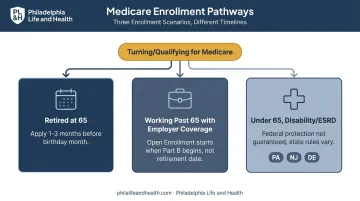
If You're Retired and Turning 65
Once you receive your Medicare card with your Part A and Part B effective dates, apply for Medigap one to three months before your 65th birthday month. This lets coverage start the same month your Medicare becomes effective, with no gap between losing prior coverage and starting your Medigap protection.
If You're Still Working Past 65 with Employer Coverage
If you have employer group coverage through a company with 20 or more employees, you can delay Part B without a late penalty. That also delays your Medigap Open Enrollment Period, since it doesn't start until Part B does.
Once that employer coverage ends, an eight-month Special Enrollment Period opens for Part A and Part B. Your Medigap Open Enrollment clock also starts the month Part B takes effect, not the month you stop working.
One caution: COBRA doesn't extend this Special Enrollment Period. Waiting for COBRA to run out before enrolling in Part B can create a penalty or a coverage gap.
If You Qualify for Medicare Under 65 (Disability or ESRD)
Federal law doesn't guarantee a Medigap Open Enrollment Period for beneficiaries under 65. However, many states step in.
Pennsylvania, New Jersey, and Delaware all require insurers to offer at least one Medigap option to under-65 enrollees with disabilities or End-Stage Renal Disease, though rules and rating categories vary by state. Check with your State Insurance Department or local SHIP office to confirm what applies where you live.
If You've Missed Your Initial Window
A handful of triggers can reopen guaranteed-issue access:
- Losing employer or retiree coverage involuntarily
- Your Medicare Advantage plan leaving the Medicare program or your service area
- Exercising a Medicare Advantage "trial right" within your first 12 months of enrollment
Some states go further. New York, Connecticut, and Massachusetts offer expanded guaranteed-issue protections, while states like California, Idaho, Maryland, Nevada, Oregon, and Oklahoma have "birthday rules" that give existing Medigap holders an annual window to switch plans without underwriting.
Signs It's the Right Time to Apply
You're ready to apply when:
- Your Part A and Part B are active, or about to start
- You're within your six-month Open Enrollment window
- You'd rather lock in coverage now than risk a new health issue later
Applying as early as possible in the window, even before Medicare technically starts, gives you the most leverage and the lowest odds of facing a pre-existing condition waiting period.
What Happens If You Miss Your Medigap Open Enrollment Window
Miss the window, and in most states, insurers are free to medically underwrite your application. That can mean:
- Higher premiums based on your health history
- Exclusions for specific conditions
- Outright denial of the policy
- Fewer plan choices, since insurers aren't required to offer every plan type once guaranteed-issue rights expire
Example: Retiring at 64 Without Prior Coverage
Say someone retires at 64, goes without coverage for four months before Medicare starts, then applies for Medigap. Because they lack six months of continuous prior creditable coverage, the insurer can impose a pre-existing condition waiting period of up to six months.
During that waiting period, Original Medicare still pays its share of covered services. What Medigap won't cover is the cost-sharing portion tied to that specific pre-existing condition, meaning the beneficiary is on the hook for coinsurance or copayments until the waiting period ends.
Medicare's official guidance confirms this waiting period caps at six months and can be reduced or eliminated entirely with proof of qualifying prior coverage.
Best Practices for Timing Your Medigap Enrollment Correctly
A little planning goes a long way here. Consider these steps:
- Mark your calendar with three dates: your 65th birthday month, your Part B effective date, and the day your six-month window closes
- Gather proof of creditable coverage now. Pull records from your employer plan, COBRA, Medicaid, or marketplace plan before you apply, since documentation can reduce or eliminate a waiting period
- Confirm your Part B effective date with Medicare directly rather than assuming it matches your 65th birthday, especially if you delayed enrollment
- Work with an independent advisor who can review your specific timeline and compare carriers on your behalf
According to Medicare's enrollment guidance, your six-month window starts the first day of the month you're both 65 and enrolled in Part B.
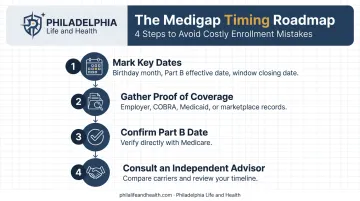
Getting that Part B date right is the foundation everything else builds on.
This is exactly where working with an independent, local team pays off. The Medicare advisors at Philadelphia Life and Health help Pennsylvania, New Jersey, and Delaware residents review their personal timing and compare Medicare Supplement plan options across carriers. This guidance helps clients avoid enrollment mistakes that lead to higher premiums or coverage denials.
Conclusion
There's no single "best time" to enroll in Medigap that applies to everyone. It depends on your retirement status, your current coverage, and your age when Medicare eligibility begins.
What stays consistent: applying during your six-month Open Enrollment Period gives you the strongest guaranteed-issue protections and typically the best pricing you'll ever see for that policy.
Miss it, and you're gambling with underwriting, higher costs, or denial. If you're approaching 65, still working with employer coverage, or unsure where your window stands, reach out to the team at Philadelphia Life and Health for personalized guidance on timing your Medigap enrollment correctly.
Frequently Asked Questions
What is the 6-month Medigap open enrollment period?
It's a one-time federal window that starts the month you turn 65 (or later) and enroll in Part B. During these six months, insurers must accept any applicant regardless of health history.
Can you change Medigap plans every year?
No. Medigap doesn't have an annual open enrollment like Medicare Advantage. Changing plans after your initial window requires medical underwriting, unless a state rule or guaranteed-issue event applies.
Do Medigap plans have a waiting period?
Insurers can apply up to a six-month pre-existing condition waiting period if you lacked six months of prior creditable coverage. Sufficient prior coverage reduces or eliminates this waiting period entirely.
Does the Medigap Open Enrollment Period happen every year like Medicare Advantage's Annual Enrollment Period?
No. It's a single six-month window tied to your Part B start date, not a recurring cycle. Don't confuse it with the October 15 through December 7 Annual Election Period, which applies only to Medicare Advantage and Part D.
What happens if I miss my Medigap open enrollment period?
You may face medical underwriting, higher premiums, limited plan options, or denial. Guaranteed-issue rights and certain state laws offer limited exceptions, so check your state's rules.
Can I enroll in Medigap if I'm under 65?
Federal law doesn't require insurers to sell Medigap to people under 65, but many states, including Pennsylvania, New Jersey, and Delaware, mandate at least one guaranteed-issue option for those with disabilities or ESRD.