

Introduction
Picture a small business owner in South Philly, scrolling through insurance quotes at midnight, trying to figure out if the "affordable" plan she found actually protects her team if someone gets sick. The paperwork uses terms like "comprehensive," "major medical," and "minimum essential coverage" almost interchangeably, but they don't mean the same thing.
That confusion is common. Many people assume any plan with a monthly premium counts as real protection, until a hospital bill proves otherwise.
Comprehensive major medical insurance is the industry's technical term for full-scale health coverage, the kind that pays for preventive visits, surgery, and everything in between. This article breaks down what qualifies, what's excluded, how it compares to skinnier alternatives, and how a local advisor can help you sort through the options.
Key Takeaways
- Major medical plans cover hospitalization, surgery, and preventive care up to an annual out-of-pocket maximum
- Short-term, catastrophic, and limited-benefit plans offer narrower protection at lower monthly cost
- Deductibles, copays, coinsurance, and subsidies determine your real out-of-pocket spending
- An independent advisor compares plans across multiple carriers rather than favoring one insurer
What Is Comprehensive Major Medical Health Insurance?
Comprehensive major medical insurance is a health plan built to cover both routine preventive care and the expensive stuff: hospitalization, surgery, cancer treatment, and long hospital stays. The term predates the Affordable Care Act (ACA), originally used to separate full-coverage policies from bare-bones "indemnity" plans that paid out fixed cash amounts regardless of actual medical costs.
Since 2014, individual and small-group comprehensive plans must cover the ACA's essential health benefits, with no annual or lifetime dollar caps. Large-group and self-insured employer plans follow different rules, but they still must provide minimum value, meaning the plan covers at least 60% of expected costs for a standard population.
Core Structural Features
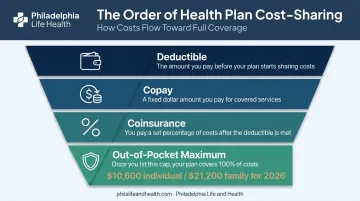
Every comprehensive major medical policy shares the same basic cost-sharing framework:
- Deductible – what you pay before the plan starts covering most services
- Copay – a flat fee for specific services, like a $30 office visit
- Coinsurance – your percentage share of costs after the deductible is met
- Out-of-pocket maximum – the annual ceiling on what you'll pay for covered, in-network care
For 2026, that ceiling can't exceed $10,600 for individual coverage or $21,200 for family coverage. Once you hit that number, the plan pays 100% of covered, in-network benefits for the rest of the year. Premiums and out-of-network charges typically don't count toward that cap, so it pays to read the Summary of Benefits and Coverage closely.
What Does Comprehensive Major Medical Insurance Cover?
ACA-compliant comprehensive plans must include all ten essential health benefit (EHB) categories:
- Hospitalization
- Outpatient and ambulatory care
- Preventive care and immunizations
- Prescription drugs
- Mental health and substance use treatment
- Laboratory services
- Emergency services
- Maternity and newborn care
- Pediatric services, including dental and vision
- Rehabilitative and habilitative services
Preventive care, think annual physicals, cancer screenings, and vaccinations, is usually covered at no additional cost when you use an in-network provider. That's intentional; catching problems early costs less than treating them late.
Coverage doesn't stop at prevention. Hospitalization and surgery coverage go deeper than most people expect, typically including room and board, nursing care, anesthesia, and surgeon fees, not just the initial ER visit. Even a routine outpatient surgery involves several billed components, and a comprehensive plan bundles protection across all of them.
The same ten benefits apply across bronze, silver, gold, and platinum tiers, but cost-sharing varies significantly between them. A bronze plan might cover the same surgery as a platinum plan, just with a much higher deductible before coverage kicks in.
Also, grandfathered and "grandmothered" plans sold before 2014 still count as comprehensive coverage, even though they weren't required to adopt every current ACA standard. If you've held one of these for years, it's worth a periodic comparison against newer marketplace options.
What Comprehensive Major Medical Insurance Does Not Cover
Comprehensive doesn't mean unlimited. A few categories consistently fall outside standard major medical coverage:
- Cosmetic procedures – insurers generally exclude purely elective surgery, though they usually cover reconstructive surgery following an accident, illness, or congenital defect
- Adult dental and vision – plans must include pediatric dental and vision as required benefits, but insurers typically sell adult coverage as a separate policy
- Long-term or custodial care – a distinct long-term care policy, not your medical plan, usually covers nursing home stays and custodial support
- Out-of-network care – coverage varies significantly by plan type, as shown below
That last point trips up a lot of people:
| Plan Type | Out-of-Network Coverage |
|---|---|
| HMO | Not covered, except in emergencies |
| PPO | Covered, but at a noticeably higher cost |
If you have a specialist you trust outside your network, that distinction matters more than the premium difference between the two plan types.
How Comprehensive Major Medical Differs From Other Health Insurance Types
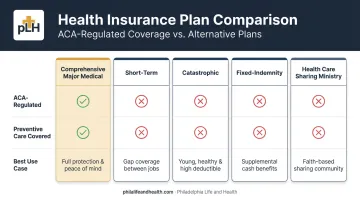
Not everything marketed as "health insurance" offers comprehensive protection. Here's how the alternatives stack up:
| Plan Type | ACA-Regulated? | Preventive Care Covered? | Best For |
|---|---|---|---|
| Comprehensive Major Medical | Yes | Yes, no cost | Anyone needing full protection |
| Short-Term Medical | No | Not required | Brief coverage gaps only |
| Catastrophic | Yes | Yes | Under-30 or hardship exemption |
| Fixed-Indemnity | No | No | Supplemental only |
Short-term health insurance isn't ACA-regulated and doesn't count as minimum essential coverage. Under current federal rules, a short-term policy's initial term can't exceed three months, with total coverage including renewals capped at four months. It fills short-term gaps, not year-round coverage needs.
Catastrophic plans take a different approach: lower premiums, but eligibility limited to people under 30 or those with a hardship exemption. They technically cover free preventive care and the ten EHBs, though steep cost-sharing applies before other benefits kick in.
On the employer side, "skinny" or limited-benefit plans satisfy the mandate on paper but often fail the 60% minimum value test. They're not equivalent to comprehensive major medical, even when marketed that way.
A final category rounds out the alternatives:
- Fixed-indemnity plans pay a set cash amount per service, regardless of the actual cost
- Critical illness policies pay a lump sum only after a specific diagnosis
- Health care sharing ministries carry no legal obligation to pay claims at all
None of these are regulated as insurance the way comprehensive plans are. The distinction that matters most: comprehensive coverage protects against the full financial risk of a serious illness, while limited plans only cover narrow, specific scenarios.
Understanding the Cost of Comprehensive Major Medical Coverage
Two cost components determine what you'll actually pay:
- Monthly premium – paid every month, regardless of how much care you use
- Cost-sharing – deductibles, copays, and coinsurance paid only when you receive care
On the ACA Marketplace, the national average premium in 2025 was $619 per month before subsidies. Among people receiving premium tax credits, the average dropped to just $113 after subsidies, and 42% of enrollees paid $10 or less per month.
Employer-sponsored plans tell a different story. Average annual premiums ran roughly $9,325 for single coverage and $26,993 for family coverage in 2025, with workers facing an average deductible near $1,886 on top of that.
Subsidies and employer contributions change what you actually pay each month. A Marketplace applicant with income between 100% and 400% of the federal poverty level may qualify for premium tax credits that shrink monthly costs dramatically. Employer contributions do the same on the group side, often covering 70% or more of the premium.
How to Get Comprehensive Major Medical Coverage in Pennsylvania
Pennsylvania residents have several paths to comprehensive coverage:
- Employer-sponsored group plans – the most common source for working adults
- ACA Marketplace plans through Pennie – Pennsylvania's official exchange and the only source for state-specific subsidies
- Medicaid – available for those who qualify based on income
- Medicare – often paired with Medigap and Part D for full comprehensiveness
Enrollment isn't open year-round. Outside the annual open enrollment window, you'll need a qualifying life event, like losing a job, getting married, or having a baby, to trigger a special enrollment period.
This is where working with a local advisor tends to pay off. Philadelphia Life and Health, a locally owned, independent advisory firm licensed in all 50 states, helps individuals, families, and small businesses with 2 to 200 employees.
They compare comprehensive major medical options across carriers like Independence Blue Cross, Aetna, Cigna, UnitedHealthcare, and AmeriHealth.
Their team includes advisors with direct carrier-side backgrounds, including experience at AIG, Cigna, and Independence Blue Cross. This shapes how they evaluate network access, prior-authorization hurdles, and prescription drug tiers that don't always show up in a quick premium comparison.
For small businesses, the process follows a straightforward path:
- Educate – reviewing current coverage, workforce needs, and budget
- Select – running a multi-carrier comparison and rate quotes tailored to your census
- Advocate – handling enrollment, claims support, and annual renewal reviews using their Ease benefits administration platform

The service is carrier-paid, meaning there's no direct fee to the business or individual for comparison and enrollment help. If you're weighing options before the next open enrollment window, reaching out for a no-obligation quote is a reasonable first step.
Frequently Asked Questions
What is a comprehensive major medical policy?
It's broad health coverage for both preventive and major medical expenses, typically including the ACA's ten essential health benefits with a capped annual out-of-pocket maximum. It provides full-scale protection for both routine and major health needs, not just a temporary fallback plan.
What does a comprehensive major medical policy not cover?
Cosmetic procedures, most adult dental and vision care, and long-term custodial care are usually excluded. Out-of-network coverage also varies depending on whether you have an HMO or PPO plan.
How does a comprehensive major medical policy differ from standard health insurance?
"Comprehensive major medical" is the technical term for standard, full-scale health insurance. It's the opposite of the limited-benefit or short-term plans often marketed as budget alternatives.
Is comprehensive major medical insurance required by law?
The federal individual mandate penalty was eliminated in 2019. A handful of states, including New Jersey and Massachusetts, still impose their own tax penalties for going without coverage.
How much does comprehensive major medical insurance typically cost?
Costs vary by metal tier, subsidy eligibility, and employer contribution. Marketplace enrollees receiving subsidies often pay far less than the unsubsidized average; see the cost section above for current benchmark figures.
Who should consider comprehensive major medical coverage?
Anyone who wants protection against unpredictable major illness costs should consider it, from people managing chronic conditions to families with children or business owners covering employees against catastrophic financial risk.