
Coverage gaps happen, and Pennsylvanians are asking the same question: is short-term health insurance legal here, and is it actually a good idea?
Short-term plans are legal in Pennsylvania, but they work nothing like ACA-compliant coverage. They're medically underwritten, they skip essential health benefits, and they're capped at just a few months.
This guide breaks down PA's current duration rules, what these plans actually cover, what they cost, and when a different option makes more sense.
Key Takeaways
- Pennsylvania caps short-term plans at 4 months total (3-month term plus 1-month renewal)
- Short-term coverage skips ACA protections like guaranteed issue and essential benefits
- These plans fit temporary gaps, not ongoing health needs or pregnancy
- Pennie enrollment, COBRA, or Medicaid/CHIP often offer better protection
- A local advisor can compare all your options before you commit to anything
What Is Short-Term Health Insurance in Pennsylvania?
Short-term (limited-duration) health insurance is temporary coverage sold by private insurers to bridge gaps between other health plans. It's designed for people who need coverage quickly, without committing to a long-term plan.
Unlike ACA marketplace plans, short-term policies aren't sold through Pennie, Pennsylvania's official ACA exchange. You buy them directly from a carrier or through a licensed broker, and the shopping experience looks completely different.
How It Differs from ACA Coverage
ACA-compliant plans guarantee you can't be turned down for your health history, and they must cover essential health benefits like maternity care, mental health treatment, and prescription drugs. Short-term plans do neither.
Applying for short-term coverage means filling out a health questionnaire first. Insurers use your answers to decide:
- Whether to approve you at all
- What premium to charge you
- Which conditions to exclude from day one
A diagnosis in your medical history can get you denied outright, something that simply doesn't happen with ACA plans.
The marketplace for these plans in Pennsylvania is also narrower than most people expect. Only a handful of carriers currently file short-term products with the Pennsylvania Insurance Department, which means your options are far more limited than browsing Pennie's dozens of ACA plans.
Working with an advisor who tracks which carriers are actively selling in PA right now saves a lot of wasted searching.
Pennsylvania's Short-Term Duration Rules & Eligibility
Current Duration Limits in PA
Under the federal rule that took effect September 1, 2024, short-term plans sold nationwide, including in Pennsylvania, are capped at:
- 3 months for the initial contract term
- 4 months total, counting any renewal, within a 12-month span
- No separate PA statute on short-term duration, so the state defaults to this federal cap
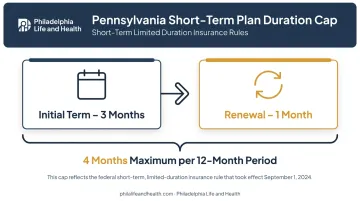
This replaced the longer terms some carriers previously offered. The CMS fact sheet on the 2024 rule confirms the cap applies across renewals issued by the same issuer or its affiliated companies.
Here's where it gets murky. In August 2025, federal regulators announced they'd pause active enforcement of this rule while pursuing new rulemaking, though they didn't repeal it.
That means the 3-month-plus-1-month cap remains the operative rule in PA unless the state explicitly says otherwise. Because federal policy on this topic keeps shifting, confirm the current limit before you enroll by checking with a licensed advisor, such as the team at Philadelphia Life and Health, or the PA Insurance Department. Don't assume last year's rules still apply.
Who Qualifies for Coverage
Most short-term applicants need to be under 65 and pass a medical questionnaire. Beyond that, eligibility comes down to carrier-specific underwriting standards.
One term worth understanding before you sign anything: post-claims underwriting. This is when an insurer reviews your medical records after you file a claim, not before, to determine whether your condition was pre-existing. If they decide it was, they can deny the claim or rescind your coverage entirely.
Eligibility criteria vary meaningfully between the few carriers writing short-term business in Pennsylvania right now, so comparing more than one quote matters.
What Short-Term Plans Cover, Exclude, and Cost
Short-term plans typically cover the basics:
- Preventive care visits
- Primary care and specialist doctor visits
- Urgent care
- Emergency room visits
- Limited prescription benefits (on some plans, not all)
What they generally leave out is more important:
- Pre-existing conditions: virtually universal across short-term products
- Maternity care: excluded on nearly every plan on the market
- Mental health and substance use treatment: excluded on a large share of policies
- Dental and vision: often absent, though this varies by certificate
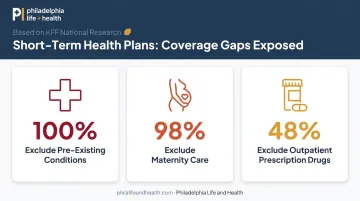
A KFF review of roughly 200 short-term plans nationwide found 100% excluded pre-existing conditions, 98% excluded maternity, and 48% excluded outpatient prescription drugs. These are multi-state figures, but they reflect the pattern you'll see in Pennsylvania too.
Cost Breakdown
| Cost Factor | Short-Term Plans | ACA Marketplace Plans |
|---|---|---|
| Monthly premium | Often lower upfront | $624/month avg. gross, 2024 (Pennie's Annual Report) |
| Subsidy eligible | No | Yes, for qualifying incomes |
| Deductible | Often much higher | Varies by metal tier |
| Approval time | Often 1-2 days | Standard enrollment window |
After subsidies, Pennie enrollees paid an average net premium of just $175 per month in 2024. That's the trade-off: short-term plans win on speed and low sticker price, but they offer no subsidy path and cap dollar amounts per service. Always read the "exclusions and limitations" summary closely, especially around prescription drugs, before you enroll.
Who Should (and Shouldn't) Consider a Short-Term Plan in PA
Short-term coverage tends to fit specific, temporary situations well:
- Starting a new job with a waiting period before benefits activate
- Missing open enrollment without a qualifying life event to trigger a special enrollment period
- Bridging a short gap before Medicare eligibility
It's a poor fit for people who need consistent, comprehensive care. Avoid short-term plans if you're:
- Managing a chronic condition like diabetes or heart disease
- Expecting or planning to become pregnant
- Depending on regular prescription medication
If any of these situations apply to you, check whether you qualify for a Pennie special enrollment period before enrolling in a short-term plan. A subsidized ACA plan frequently costs less out of pocket than a short-term policy once you factor in what it won't cover.
Alternatives to Short-Term Insurance in Pennsylvania
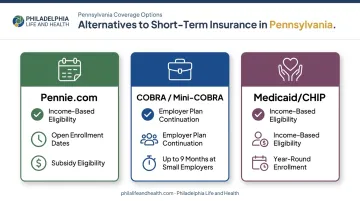
Short-term coverage isn't the only bridge option available. Depending on your situation, one of these may serve you better:
- Pennie.com — PA's official ACA marketplace. Open enrollment runs November 1 through January 15, but qualifying life events like job loss or marriage trigger special enrollment year-round. Subsidies can lower premiums substantially.
- COBRA / Mini-COBRA — Lets you keep your employer plan at full premium cost. PA's Mini-COBRA covers small employers (2-19 employees) for up to 9 months at up to 105% of the group rate.
- Medicaid/CHIP — Year-round, income-based coverage for qualifying adults, children, and families, with no enrollment deadline to worry about.
Sorting through Pennie eligibility, COBRA costs, Medicaid income limits, and short-term plan trade-offs at the same time gets confusing fast. This is especially true when you're already dealing with a job change or a missed deadline.
This is where Philadelphia Life and Health comes in. As a Philadelphia-based independent advisory firm, we review all of these paths side by side, at no direct cost to you, since our advisory work is carrier-paid. If short-term coverage is genuinely your best option for the gap you're facing, we'll tell you that too.
Frequently Asked Questions
What is the best short-term health insurance in PA?
There's no single "best" plan. It depends on your health history and budget. Comparing the handful of PA-approved carriers with a licensed advisor is the most reliable way to find the right fit for your situation.
Can you go without health insurance in PA?
Yes, Pennsylvania has no state penalty for being uninsured. That said, going without coverage leaves you fully exposed to the cost of an unexpected ER visit, surgery, or hospital stay.
What is the maximum duration of a short-term health insurance policy in PA?
The current cap is a 3-month initial term plus one 1-month renewal, for 4 months total. Pennsylvania defaults to this federal standard since it has no separate state duration statute.
Do short-term health plans cover pre-existing conditions in Pennsylvania?
Generally, no. Most short-term plans exclude pre-existing conditions and use post-claims underwriting, meaning they can review your medical history after you file a claim to confirm the exclusion applies.
How much does short-term health insurance cost in PA?
Premiums are usually lower than ACA plans, but deductibles and coinsurance often run higher. Your total cost depends heavily on how much care you actually end up needing during the term.
Can I cancel a short-term health plan at any time?
Yes, you can typically cancel a short-term plan anytime without a penalty, unlike traditional plan commitments. Refund terms after any initial free-look period vary, so check your specific certificate before you cancel.