

Introduction
The Medicare Annual Enrollment Period, or AEP, runs every year from October 15 to December 7. It's the one stretch of the calendar when nearly every Medicare beneficiary can change how they get their coverage for the following year.
This guide is written for Medicare beneficiaries across Pennsylvania, New Jersey, and Delaware who want to understand exactly what AEP allows and what it doesn't.
Getting this window right matters. Nearly 69% of Medicare beneficiaries didn't compare their coverage options during a recent open enrollment period, according to KFF's analysis of CMS survey data. Many are likely leaving money, or better coverage, on the table.
AEP gets confused with other Medicare enrollment windows constantly. Below, we'll break down what AEP actually covers, what changes it, and how it differs from the periods that follow it.
Key Takeaways
- AEP runs October 15 to December 7 annually; changes take effect January 1
- Switch between Original Medicare and Medicare Advantage, change MA plans, or adjust Part D coverage
- MA OEP (Jan 1–Mar 31) differs from AEP, allowing only one plan change for current MA members
- Missing AEP means waiting for the next window, unless a life event triggers a Special Enrollment Period
- An independent local advisor compares plans across carriers, not just one company's lineup
What Is the Medicare Annual Enrollment Period (AEP)?
AEP is the annual window, October 15 through December 7, when current Medicare beneficiaries can change how they receive their coverage for the upcoming year. It's the single biggest opportunity most people get each year to reset their Medicare plan.
The purpose is straightforward: give beneficiaries a yearly chance to match their coverage to their actual health needs, budget, and whatever plan changes carriers rolled out. Premiums shift. Drug formularies change. Networks add or drop providers. AEP exists so none of that catches you off guard.
AEP Is Not for First-Time Enrollees
This is a critical distinction that trips up plenty of soon-to-be enrollees. AEP applies only to people already enrolled in Medicare. If you're approaching 65 and signing up for Medicare for the first time, you'll use the Initial Enrollment Period (IEP) instead, a separate seven-month window tied to your birthday, not the calendar year. Confusing the two windows is one of the most common Medicare mistakes, so confirm which one actually applies to you before making any changes.
Timing Matters More Than People Realize
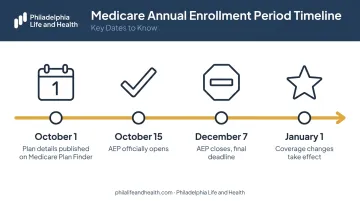
Plan and premium details for the coming year typically post to Medicare's Plan Finder by October 1, roughly two weeks before AEP officially opens. That gap is meant for research, not decision-making yet, so use it.
- October 1: Plan and pricing details become available for review
- October 15: AEP officially opens; you can submit changes
- December 7: AEP closes; last day to submit changes
- January 1: Any changes made during AEP take effect
Despite this being an annual event, most people don't act on it. National surveys consistently show that roughly seven in ten Medicare beneficiaries skip comparing plans each year, treating their current coverage as a default rather than a decision worth revisiting.
What Changes Can You Make During AEP?
What you're allowed to change depends entirely on what you currently have. Original Medicare, Medicare Advantage, and Part D each open up different options.
If You Currently Have Original Medicare
You can:
- Join a Medicare Advantage plan, with or without built-in drug coverage
- Enroll in a standalone Part D prescription drug plan
- Make no changes and stay exactly where you are
If You Currently Have a Medicare Advantage Plan
You can:
- Switch to a different Medicare Advantage plan
- Drop Medicare Advantage and return to Original Medicare (adding a standalone Part D plan if you want drug coverage)
- Make no changes at all
If You Want to Change Prescription Drug Coverage
Part D plans can be joined, dropped, or switched freely during AEP. But dropping drug coverage without a creditable replacement carries a real cost.
Medicare calculates a late-enrollment penalty equal to 1% of the national base beneficiary premium for every full month you went without creditable coverage. The 2026 national base beneficiary premium is $38.99, so even a handful of uncovered months adds up.
This penalty typically sticks with you for as long as you have Medicare drug coverage, even after switching plans years later.
One thing AEP does not touch: Medicare Supplement (Medigap) plans. Switching a Medigap policy outside your initial eligibility window usually requires medical underwriting, meaning an insurer can review your health history and price accordingly. If you're considering a Medigap switch, plan for that on its own timeline, separate from your AEP elections.
AEP vs. Other Medicare Enrollment Periods
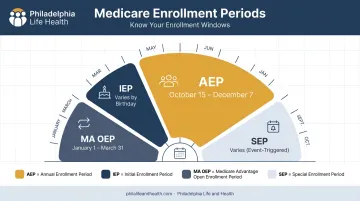
Medicare has four enrollment windows, and mixing them up is one of the most common (and costly) mistakes beneficiaries make. Here's how they stack up.
| Period | Timing | Who It's For | What It Allows |
|---|---|---|---|
| IEP | 7 months around your 65th birthday | First-time enrollees | Initial Medicare sign-up |
| AEP | Oct 15 – Dec 7 | All current beneficiaries | Multiple changes |
| MA OEP | Jan 1 – Mar 31 | Current MA enrollees only | One change |
| SEP | Varies | Those with qualifying events | Change tied to the event |
Initial Enrollment Period (IEP)
IEP is the seven-month window surrounding your 65th birthday: three months before, your birthday month, and three months after. This is your first opportunity to sign up for Medicare Part A and/or Part B. It's a one-time event, not an annual cycle like AEP.
Medicare Advantage Open Enrollment Period (MA OEP)
MA OEP runs January 1 through March 31 and applies only to people already enrolled in a Medicare Advantage plan. It permits exactly one change: switching to a different MA plan, or dropping MA to return to Original Medicare (with the option to add Part D).
The key distinction from AEP:
- AEP allows multiple changes and is open to all beneficiaries, regardless of current coverage
- MA OEP allows only one change and is restricted to current MA enrollees
- You can't use MA OEP to join Medicare Advantage from Original Medicare or switch standalone Part D plans
Special Enrollment Period (SEP)
SEPs let you make coverage changes outside AEP when a qualifying life event occurs, such as:
- Moving out of your plan's service area
- Losing employer or union coverage
- Losing Medicaid eligibility
- Losing creditable prescription drug coverage
Each SEP has its own timeline, often two to three months from the triggering event, so acting quickly matters.
How to Prepare for AEP: A Step-by-Step Checklist
Walking into AEP without prep work is how people end up with a plan that no longer fits by December. These three steps cover the essentials for locking in coverage that still works for you.
Step 1: Review Your Annual Notice of Change (ANOC)
Plans mail an ANOC each September, and Medicare requires plans to deliver it by September 30. This document spells out exactly what's changing in your plan next year: premiums, deductibles, drug formularies, and covered services. Read it before assuming your current plan is still your best option.
Step 2: Compare Costs and Coverage Across Plans
Line up your options side by side:
- Compare premiums and out-of-pocket maximums across available plans
- Check drug formularies to confirm your prescriptions are still covered at a reasonable tier
- Review copays and deductibles for services you actually use, not hypothetical ones
Step 3: Confirm Provider and Pharmacy Networks
A cheaper plan means nothing if your cardiologist or preferred pharmacy is out of network next year. Call your providers directly or check the plan's network directory before submitting any change. This single step prevents the most disruptive surprises beneficiaries face after switching.
Common AEP Mistakes and When to Get Professional Help
Even well-intentioned beneficiaries fall into a few predictable traps every year:
- Assuming no action means no risk. Being satisfied with your current plan doesn't guarantee it's staying the same. Networks shrink, formularies change, and premiums rise. Skipping the ANOC review is how people get blindsided in February.
- Confusing AEP with MA OEP. Some beneficiaries assume they can keep adjusting their coverage after December 7. They can't, unless they're already in a Medicare Advantage plan and limited to a single change during MA OEP.
- Dropping drug coverage carelessly. Letting Part D lapse without a creditable alternative triggers that late-enrollment penalty covered earlier, and it doesn't go away easily.
This is where working with an independent advisor pays off. Philadelphia Life and Health, an independently operated brokerage based in Philadelphia, compares Medicare Advantage, Part D, and Medicare Supplement options across multiple top-rated carriers . It doesn't steer clients toward a single company's plan lineup. That matters because a single-carrier call center has no incentive to tell you a competitor's plan fits you better.
The firm works with beneficiaries throughout Pennsylvania, New Jersey, and Delaware, supporting plan selection and enrollment year-round, not just during the seven-week AEP window. If you're unsure whether your current plan still makes sense, that's exactly the kind of question a local, carrier-agnostic advisor is built to answer.

Frequently Asked Questions
What is the AEP in Medicare?
AEP is the Medicare Annual Enrollment Period, running October 15 to December 7 each year. It's when current beneficiaries can change their Medicare coverage for the following year, with changes taking effect January 1.
What is the difference between AEP and MA OEP?
AEP allows multiple types of changes and applies to all Medicare beneficiaries. MA OEP (January 1–March 31) allows only one change and is limited to people already enrolled in a Medicare Advantage plan.
What can you do during AEP Medicare?
You can switch between Original Medicare and Medicare Advantage, change Medicare Advantage plans, or join, switch, or drop Part D prescription drug coverage. You can also make no changes if your current plan still works.
What happens if I miss the AEP deadline?
You'll need to wait for the next applicable enrollment period, such as MA OEP if you're in Medicare Advantage. That said, you may qualify for a Special Enrollment Period if you experience a life event like moving or losing employer coverage.
Can I enroll in Medicare for the first time during AEP?
First-time enrollment happens during your Initial Enrollment Period, not AEP. However, if your IEP overlaps with the AEP window, you can enroll during that overlap period.
Do I need to do anything during AEP if I'm happy with my current plan?
No action is required if your plan still meets your needs and is offered again next year. That said, review your ANOC letter since costs or benefits may have changed even if you're satisfied overall.