
Introduction
Shopping for health insurance in the Philadelphia area, you've probably run into two plans with nearly identical names: Keystone HMO Gold Proactive and Keystone HMO Silver Proactive. Both come from Keystone Health Plan East, the commercial HMO arm of Independence Blue Cross.
Here's the problem. Many shoppers confuse these "Proactive" plans with standard Keystone HMO plans, or worse, with Keystone First, Pennsylvania's Medicaid managed care program. That mix-up leads to real enrollment mistakes and unexpected bills.
Add in a tiered provider network most people have never dealt with, and it's easy to see why confusion runs high. This guide breaks down how the tier system actually works, what these plans cover, and how to pick the right one with independent guidance from Philadelphia Life and Health, a local Philadelphia advisory firm.
Key Takeaways
- Keystone HMO Proactive plans use the full IBX network, split into three cost tiers
- Preferred-tier providers cost the least, covering more than half of network doctors
- Gold Proactive carries no deductible in any tier, unlike Silver Proactive's Tier 2–3 deductibles
- Both plans are ACA Marketplace-eligible and may qualify for premium tax credits
- Keystone First is a separate Medicaid plan and has nothing to do with these commercial options
What Is a Keystone HMO Proactive Plan?
A Keystone HMO Proactive plan is an HMO that requires you to pick a primary care physician (PCP), but with a twist. Instead of one flat network, Independence Blue Cross (IBX) splits its entire Keystone Health Plan East network into cost-sharing tiers.
You're not limited to a smaller network. Instead, you pay different amounts depending on which tier your provider falls into.
These plans sit alongside standard Keystone HMO and PPO options, sold both on and off the ACA Marketplace, for residents of five counties:
- Philadelphia
- Bucks
- Montgomery
- Chester
- Delaware
Proactive vs. Standard Keystone HMO vs. Keystone First
This is where confusion creeps in most often. Three separate things get lumped together:
- Keystone HMO Proactive: a tiered commercial HMO from Keystone Health Plan East (this guide's focus)
- Standard Keystone HMO: a flat-rate commercial HMO, also from Keystone Health Plan East
- Keystone First: a completely separate Pennsylvania Medicaid managed care plan, with coverage provided by Vista Health Plan
If you're comparing Marketplace options for your family, you want option one or two, not Keystone First.
All Marketplace-tier Keystone plans, Proactive included, must cover the ten federally required Essential Health Benefits. That means preventive care, hospitalization, maternity, mental health, and prescriptions are baked in no matter which tier you choose.
The core appeal? You can steer toward preferred-tier providers to save money, but you're never locked out of Keystone's broader network if you need a specialist who happens to sit in a higher-cost tier.
How the Proactive Tier System Works
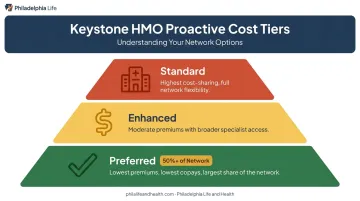
Every in-network doctor and hospital gets sorted into one of three tiers:
| Tier | Name | Cost Position |
|---|---|---|
| 1 | Preferred | Lowest cost sharing |
| 2 | Enhanced | Moderate cost sharing |
| 3 | Standard | Highest cost sharing |
According to IBX's own plan pages, more than half of in-network doctors and hospitals sit in the Preferred tier. That's a helpful starting point, but tier assignments shift periodically, so it's worth checking IBX's provider tools before you assume your favorite doctor is still Preferred.
Not Everything Is Tiered
Some services cost the same no matter which tier your provider falls into:
- Preventive care
- Emergency room visits
- Mental health and substance-use outpatient care
- Physical, occupational, and speech therapy
- Urgent care
Other services vary by tier, including hospital admissions, maternity stays, and outpatient surgery. A Tier 1 hospital stay might run you a few hundred dollars per day. The same stay at a Tier 3 facility could cost hundreds more.
One More Wrinkle: Same Group, Different Tiers
Here's a detail that trips people up. The same physician group can have different tier assignments at different office locations. Your doctor might be Preferred at their main office and Standard at a satellite location across town.
Before scheduling anything non-emergency, use the online provider tier-lookup tool on IBX's site or ask your broker to verify. And remember, mixing tiers is allowed. You can see a Preferred-tier PCP and a Standard-tier specialist under the exact same plan without penalty.
Gold Proactive vs. Silver Proactive: Comparing the Plan Options
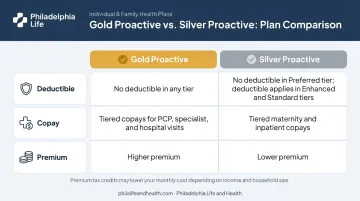
Gold Proactive and Silver Proactive are the two Proactive metal-tier options currently sold. Both use the same three-tier structure, but their cost-sharing math differs quite a bit.
Gold Proactive carries no deductible in any tier and uses tiered copays instead:
- PCP visits, specialist visits, and daily hospital admission costs all scale up as you move from Preferred to Standard
- Inpatient facility costs can differ by hundreds of dollars per day between tiers
- Predictable copays make budgeting easier, even if your monthly premium runs higher
Silver Proactive takes a different approach:
- No deductible applies in the Preferred tier
- A deductible kicks in once you use Enhanced or Standard tier providers, shared across both
- Maternity and inpatient copays are also tiered, with Preferred costing noticeably less than Standard
Because exact copay and deductible figures change with each plan year, always confirm current numbers directly from Independence Blue Cross (IBX)'s official Summary of Benefits and Coverage before enrolling.
Which Plan Fits Which Shopper?
Gold Proactive suits people who want predictable copays and don't mind a higher premium in exchange for lower cost-sharing at the point of care. Silver Proactive suits budget-conscious shoppers who are disciplined about sticking to Preferred-tier providers and want a lower premium.
Both plans are sold through the ACA Marketplace, so household income may qualify you for a premium tax credit that lowers your monthly cost. Eligibility depends on your specific household size and income, and a local advisor can run that number for you in minutes.
What's Covered Under Keystone HMO Proactive Plans
Prescription coverage runs through the FutureScripts Preferred Pharmacy Network, with tiered copays for generic versus brand-name drugs. Certain preventive medications are covered at no cost, including:
- Specified contraceptives (oral, injectable, and barrier methods)
- Tobacco cessation products, including varenicline and nicotine patches
- Folic acid supplements for women planning or capable of pregnancy
Maternity and preventive care benefits are fully covered, including prenatal visits, delivery, and postpartum care, with no waiting period. That's a meaningful benefit if you're planning a family and want coverage to kick in right away rather than after a multi-month wait.
Beyond core medical coverage, members get a few wellness extras, including a 24/7 RN Health Coach line for health questions any time of day, plus the Blue365 discount program covering gym memberships, fitness gear, and healthy travel.
These perks won't be the deciding factor in your plan choice, but they're a nice bonus once you're enrolled.
Keystone HMO Proactive vs. Standard HMO vs. PPO
Not sure whether tiered pricing is even worth the hassle? Here's how the three main structures stack up.
| Feature | HMO Proactive | Standard HMO | PPO |
|---|---|---|---|
| PCP required | Yes | Yes | No |
| Referrals needed | Usually | Usually | No |
| Network cost structure | Tiered (varies by provider) | Flat rate | Full network, in and out |
| Out-of-network coverage | No (except emergencies) | No (except emergencies) | Yes, at higher cost |
| Typical premium | Moderate | Moderate | Higher |
Standard HMO plans charge one flat rate no matter which in-network provider you see. Simple, but you lose the chance to save by choosing a Preferred-tier doctor.
PPO plans skip the PCP referral requirement entirely and let you see out-of-network providers, though you'll pay more for that flexibility through higher premiums and out-of-pocket costs.
So who fits where?
- HMO Proactive works for budget-focused members comfortable with referrals who want to actively manage costs by choosing tiers
- PPO works for people who want maximum flexibility and don't want to think about referrals or tiers at all
- Standard HMO works for those who want simplicity and don't want to bother tracking provider tiers
How to Choose and Enroll in the Right Keystone HMO Proactive Plan
Comparing Gold Proactive against Silver Proactive, let alone against other Keystone and IBX products, involves a lot of moving pieces: copays, deductibles, tier percentages, and provider lookups. Getting one of those wrong can mean paying hundreds more than expected for a routine hospital stay.
This is where a quick conversation with a licensed, local advisor pays off.
Philadelphia Life and Health is an independent brokerage based right here in the city, at 1621 Carpenter St., with a second office in East Norriton. The firm has helped Philadelphia-area individuals, families, and small businesses compare plans since 2002.

Because the team works across multiple carriers, including Independence Blue Cross, they can put Gold Proactive and Silver Proactive side by side with other options and explain the trade-offs in plain English.
Support doesn't stop once you're enrolled, either:
- Claims advocacy: If a claim gets denied or a bill looks wrong, the team reads it, calls the carrier, and stays on the case until it's resolved
- Renewal reviews: Your plan gets a real annual comparison, not a rubber-stamp renewal notice
- Year-round account management: The same advisor, same phone number, every year, rather than a rotating call-center queue
If you're weighing Gold Proactive against Silver Proactive before the next enrollment deadline, reach out to Philadelphia Life and Health at (215) 544-5432 or info@philalifeandhealth.com for a personalized comparison.
Frequently Asked Questions
What does HMO insurance cover?
HMO plans cover the ten ACA Essential Health Benefits, including preventive care, hospitalization, maternity, prescriptions, and mental health. You'll need to use in-network providers coordinated through your PCP.
Is Keystone First Pennsylvania a Medicaid plan?
Yes. Keystone First is a separate Pennsylvania Medicaid managed care plan; Vista Health Plan provides its coverage. It's distinct from Keystone Health Plan East's commercial HMO Proactive plans covered in this guide.
Is HMO better than health insurance?
That's a bit of an apples-to-oranges question. HMO is a type of health insurance, not an alternative to it. It typically works best for people who want lower premiums in exchange for sticking to a defined provider network.
What is the difference between Keystone HMO Proactive and a standard Keystone HMO plan?
Proactive plans use a tiered-network cost structure, where your costs depend on which tier your provider falls into. Standard Keystone HMO plans charge flat rates regardless of which in-network provider you choose.
Can I get financial help paying for a Keystone HMO Proactive plan?
Yes. Both Gold Proactive and Silver Proactive are sold on the ACA Marketplace and may qualify for premium tax credits depending on your household income.
Who should consider a Keystone HMO Proactive plan?
Cost-conscious shoppers in the five-county Philadelphia area who don't mind using a PCP and can flex toward Preferred-tier providers fit these plans best. An independent broker like Philadelphia Life and Health can help you match your preferred doctors to the right tier before enrolling.