

Introduction
Turning 65, or already relying on Original Medicare, means facing one decision that shapes your healthcare for years: Medicare Advantage or Medigap.
Many people treat this as a minor formality. It isn't.
This one choice sets your monthly premium, out-of-pocket costs when you get sick, which doctors you can see, and your financial exposure during a major illness.
Here's the part that catches people off guard: you can't have both. Federal rules block combining Original Medicare with Medigap while also holding an active Medicare Advantage plan.
Pick wrong, or pick late, and switching later can mean medical underwriting, higher premiums, or outright denial.
This guide breaks down the real costs, the coverage gaps, and how to decide which path fits your health, budget, and lifestyle.
Key Takeaways
- Medicare Advantage bundles Parts A, B, and D into one plan, often with a $0 premium but network limits
- Medigap provides predictable costs and nationwide provider access, but requires a separate Part D plan
- Federal law bars holding both plans at once, so you must choose one path
- Missing the 6-month Medigap window can trigger lifetime medical underwriting
- No single plan fits everyone: health status, travel habits, and budget decide the best fit
Medicare Advantage vs Medigap: Quick Comparison
Numbers tell the story faster than descriptions. Here's how the two paths stack up on what matters most:
| Factor | Medicare Advantage | Medigap |
|---|---|---|
| Monthly premium | Avg $14/month (2026), plus Part B premium | Avg $217/month (2023 national average) |
| Out-of-pocket cap | $9,250 in-network / $13,900 combined (2026 max) | No cap needed — comprehensive coverage |
| Provider access | In-network only (HMO/PPO); referrals often required | Any provider nationwide accepting Medicare |
| Drug coverage | Usually included (MAPD plans) | Not included; separate Part D required |
| Extra benefits | Dental, vision, hearing, fitness often included | None, except select plans cover emergency foreign travel |
The $14 average premium for Medicare Advantage in 2026 is a national estimate from CMS's 2026 payment announcement, down slightly from $16.40 in 2025.
Medigap's overall average, sourced from KFF's analysis of Medigap enrollment and premiums, was $217/month in 2023. Broken down by plan letter, Plan G averaged $164/month, while the more comprehensive Plan F ran closer to $274/month. Both figures sit far above Medicare Advantage premiums, but they come with far less exposure to surprise bills.
Beyond monthly premiums, the out-of-pocket cap matters more than it sounds. Actual 2026 spending averaged just $5,421 in-network for Medicare Advantage enrollees, well below the statutory ceiling. But a bad year with major surgery or a hospital stay can push someone close to that $9,250 limit fast.
What Is Medicare Advantage?
Medicare Advantage, or Part C, is a private-insurance alternative to Original Medicare. Insurers contract with Medicare to cover everything Part A and Part B cover, and most plans wrap in Part D drug coverage plus extras like dental and vision.
The appeal is convenience. One card, one plan, often one monthly bill covering hospital stays, doctor visits, and prescriptions. For someone who doesn't see specialists often, that simplicity tends to come with a lower monthly cost too.
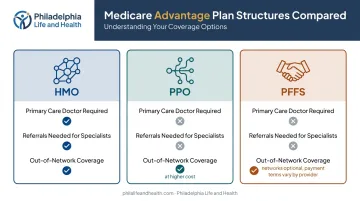
Plans generally fall into three structures:
- HMO – Requires a primary care doctor and referrals for specialists; care must stay in-network except for emergencies
- PPO – No referrals needed; out-of-network care is allowed but costs more
- PFFS – Uses providers who accept the plan's payment terms; some have networks, others don't
Every Medicare Advantage plan also caps what you'll pay out of pocket each year for Part A and B services. For 2026, that ceiling sits at $9,250 in-network or $13,900 combined — a safety net Original Medicare alone doesn't offer.
Who Chooses Medicare Advantage
This path tends to fit:
- Retirees who are relatively healthy and don't anticipate frequent specialist care
- Budget-conscious enrollees comfortable trading network restrictions for lower premiums
- People living in areas with strong local provider networks under the plan
Enrollees aren't locked in permanently. Two windows allow yearly adjustments: the Annual Enrollment Period (Oct 15–Dec 7) and the Medicare Advantage Open Enrollment Period (Jan 1–Mar 31), during which one plan switch is allowed.
The trend backs up its popularity. In 2026, 55% of Medicare beneficiaries with both Parts A and B (35.2 million people) were enrolled in Medicare Advantage, up from 54% the year before, according to KFF's 2026 enrollment update.
What Is Medigap?
Medigap, or Medicare Supplement Insurance, is private coverage you buy alongside Original Medicare. Rather than replacing Parts A and B, it fills the gaps — reimbursing deductibles, copays, and coinsurance depending on which lettered plan you choose.
The core benefit is predictability. A three-week hospital stay that would otherwise trigger daily coinsurance charges under Original Medicare gets absorbed by most Medigap plans, protecting you from open-ended bills during a health crisis.
Medigap plans are standardized: A, B, D, G, K, L, M, and N are generally available to anyone newly eligible since 2020 (Plans C and F remain only for those eligible before that date). Because benefits under, say, Plan G are identical no matter which insurer sells it, price and customer service become the real differentiators, not coverage itself.
What Medigap doesn't cover matters too. It excludes prescription drugs entirely, so you'll need a standalone Part D plan. It also skips dental, vision, and hearing coverage. Some plans do cover emergency care during foreign travel, a rare Medigap extra.
Who Chooses Medigap
This path tends to fit:
- People managing chronic conditions or seeing multiple specialists regularly
- Frequent travelers who want coverage that follows them anywhere in the U.S.
- Anyone who values predictable monthly budgeting over the lowest possible premium
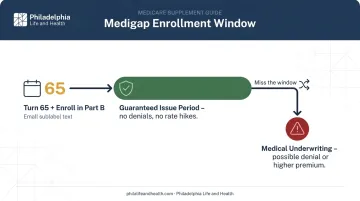
Whichever group you fall into, enrollment timing can matter as much as the plan itself. The 6-month Medigap Open Enrollment Period starts the month you turn 65 and enroll in Part B. During this window, insurers can't deny you or charge more due to health conditions. Miss it, and future applications may involve medical underwriting, meaning denial or a higher premium is entirely possible.
Despite higher premiums, Medigap remains widely used. It covered 43% of people on traditional Medicare in 2023, roughly 12.2 million beneficiaries, per KFF's research cited above.
Medicare Advantage vs Medigap: Which Is Better for You?
There's no universal winner here. The right fit depends on your situation. It comes down to four questions: How's your health? How much do you travel? What's your risk tolerance? How attached are you to specific doctors?
Choose Medicare Advantage if you:
- Want the lowest possible monthly premium
- Like the idea of bundled dental, vision, and hearing benefits
- Are comfortable working within a network near home
- Don't expect frequent specialist visits or major procedures
Choose Medigap if you:
- Want to see any provider nationwide without referrals
- Travel frequently or split time between states
- Have a chronic condition requiring ongoing specialist care
- Prioritize predictable costs over the lowest premium
Consider two retirees with the same diagnosis: type 2 diabetes managed with regular endocrinologist visits. One picks Medicare Advantage for its $0 premium and dental coverage. The other pays roughly $180 more per month for a Medigap Plan G policy.
Within two years, the first retiree needs a specialist outside their plan's network and racks up $4,000 in out-of-network costs before hitting the plan's out-of-pocket cap. The second, hospitalized briefly after a complication, pays little beyond the Part B deductible. Medigap absorbs the rest. Same health condition, two very different financial outcomes.
This is exactly the kind of tradeoff that's hard to spot without guidance. Philadelphia Life and Health works with carriers including Humana, Cigna, AARP, Aetna, and Mutual of Omaha to compare Medigap plan letters and Medicare Advantage options available in your specific ZIP code. The team checks your current doctors against plan networks, drug coverage, and total cost exposure before you commit.
Since enrollment timing often can't be undone, a conversation before you sign up costs nothing and can prevent an expensive mistake. Reach the team at (215) 544-5432 or info@philalifeandhealth.com to compare options side by side.
Conclusion
Choosing between Medicare Advantage and Medigap comes down to matching coverage to your circumstances, not chasing a universally "better" plan. Medicare Advantage suits those who want lower premiums, bundled extras, and don't mind network rules. Medigap suits those who want provider freedom and cost predictability, even at a higher monthly price.
What's not negotiable is timing. Choosing the right plan during your initial enrollment window can prevent downstream headaches, from unexpected medical bills to being locked out of Medigap later through medical underwriting.
Before committing, talk to a licensed, local advisor, such as our team at Philadelphia Life and Health, who can walk through your specific health needs, budget, and provider preferences. Enrollment decisions here are often irreversible, so get it right the first time.
Frequently Asked Questions
Is it better to have a Medigap plan or a Medicare Advantage plan?
Neither is universally better. Medigap suits people who want provider flexibility and predictable costs, while Medicare Advantage suits those who want lower premiums and bundled extras. The right fit depends on your health needs and budget.
Can I switch between Medigap and Medicare Advantage?
Yes, during designated enrollment periods. But switching from Medicare Advantage back to Medigap later may require medical underwriting, which can mean denial or higher premiums outside a guaranteed-issue window.
Can I have both Medicare Advantage and Medigap at the same time?
No. Federal rules prohibit selling or using a Medigap policy alongside an active Medicare Advantage plan, so you must choose one path.
When is the best time to enroll in Medigap or Medicare Advantage?
Medigap's most favorable window is the 6-month period starting when you turn 65 and enroll in Part B. Medicare Advantage can be joined during your Initial Enrollment Period or the Oct 15–Dec 7 Annual Enrollment Period.
Does Medicare Advantage cover prescription drugs while Medigap does not?
Correct. Most Medicare Advantage plans include Part D drug coverage bundled in. Medigap plans never cover prescriptions, so you'd need a separate standalone Part D policy.
How much do Medicare Advantage and Medigap plans typically cost?
Medicare Advantage averaged $14/month in 2026 plus the Part B premium, with variable out-of-pocket costs. Medigap averaged $217/month in 2023, with minimal additional out-of-pocket spending.