

Introduction
Nobody wants to sit down and think about dying. It's uncomfortable, maybe even a little morbid, especially when you're juggling school pickups, mortgage payments, and everything else that comes with raising a family.
That discomfort is exactly why so many families go without adequate coverage.
Family life insurance isn't one single all-purpose policy. It's a term for the combination of policies, and sometimes riders, that protect the people who depend on you financially. It can cover you, your spouse, your kids, even a parent, depending on your situation.
This guide walks through why families need coverage, who should be insured, the types of policies available, what they typically cost, and how to pick the right one.
Philadelphia Life and Health helps Pennsylvania, New Jersey, and Delaware families compare options across multiple carriers, so you're not stuck guessing which policy actually fits your life.
Key Takeaways
- Life insurance can replace lost income, pay off the mortgage, and fund college or a wedding
- Stay-at-home parents, children, and aging parents can all be worth insuring, not just the main breadwinner
- Term life offers affordable income replacement, while permanent life adds lifelong coverage and cash value
- Age, health, gender, and coverage amount determine your premium—buy early to lock in a better rate
- An independent advisor comparing multiple carriers helps you avoid overpaying for the wrong policy
Why Families Need Life Insurance
The main job of life insurance is simple: replace income the family would otherwise lose. That sounds abstract until you look at the numbers.
47% of Americans say they'd struggle to cover living expenses within six months of losing their primary wage earner, according to LIMRA and Life Happens' 2025 Insurance Barometer Study. Nearly half the country is one death away from financial trouble.
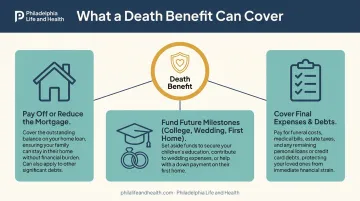
A death benefit does more than replace a paycheck, though. It can:
- Pay off or significantly reduce the mortgage, so the family stays in the home
- Fund future milestones like college tuition, a wedding, or a first home down payment
- Cover final expenses and debts without draining savings
The Stay-at-Home Parent Nobody Insures
Here's a gap a lot of families miss: insuring the parent who doesn't bring home a paycheck. Childcare, cooking, cleaning, tutoring, scheduling, the list goes on. If that parent died, someone would need to pay for all of it.
Investopedia's role-by-role breakdown puts the value of that unpaid labor at $204,932.28 per year. Replacing a stay-at-home parent's contributions with paid help isn't cheap, and a policy just for the working spouse won't cover that gap.
Beyond covering income and caregiving costs, life insurance offers a few more advantages worth knowing about:
- Death benefits are generally income-tax-free, making life insurance an efficient way to leave money to your kids
- For family-owned businesses, a policy can keep the lights on or fund a smooth ownership transition after a loss
Who in Your Family Needs Coverage
Not every family member needs the same amount, or even needs a policy at all. Here's how to think through it.
The Primary Income Earner(s)
This is the most obvious one. To figure out how much coverage makes sense, most families use one of two approaches:
- Income multiplier – multiply annual income by the number of years the family would need support
- Expense-based – add up debts, income replacement, mortgage balance, and future education costs (often called the DIME method)
Both work. The expense-based method tends to be more precise since it accounts for actual obligations rather than a flat multiple.
Stay-at-Home Parents and Caregivers
As covered above, losing an unpaid caregiver creates real costs, such as childcare, tutoring, and household help, even though there's no salary to replace. A policy on this parent offsets those costs directly.
Children
Insuring a child sounds unusual until you see the logic:
- Locks in low premiums for life while they're young and healthy
- Protects future insurability if a health issue develops later
- Covers funeral costs and grief-related time off work in a worst-case scenario
Aging Parents or Grandparents
You can insure a parent, but you'll need insurable interest and their consent. This kind of policy typically covers final expenses, outstanding debts, or the cost of replacing caregiving support they were providing, like babysitting grandkids or helping around the house.
Types of Life Insurance for Families
Once you know who needs coverage, the next question is what kind.
Term Life Insurance
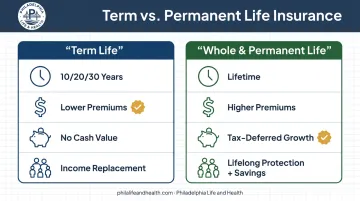
Term policies run for a set period, usually 10, 20, or 30 years, and are the most budget-friendly way to cover the years your kids are financially dependent. Match the term to the job: if your youngest is 5, a 20-year term carries you until they're financially independent adults.
Whole and Other Permanent Life Insurance
Whole life and universal life last your entire lifetime and build tax-deferred cash value you can tap later for a wedding, tuition, or retirement supplement. According to Guardian Life, premiums for permanent policies run considerably higher than term for the same death benefit, but you get lifelong protection and a guaranteed benefit in return.
Riders That Add Family-Specific Protection
Riders let you customize a base policy without buying a separate one. Key riders include:
- Child rider – adds coverage for kids under a parent's policy, often convertible to their own policy as adults
- Waiver of premium – keeps the policy active without payments if you become disabled or seriously ill
- Family accidental death benefit – pays an additional amount if death results from an accident
How Much Does Family Life Insurance Cost
Premiums come down to five main factors:
- Age – younger applicants pay less
- Health and tobacco use – smokers pay much more
- Gender – women typically pay slightly less than men at the same age
- Policy type – term costs far less than permanent coverage for equivalent death benefits
- Coverage amount – more coverage, higher premium
Buying earlier locks in a better rate before age or health changes push the price up.
So what does a $100,000 policy actually cost? Rates vary by insurer, but here's a general benchmark for a healthy, nonsmoking applicant buying a 20-year term policy:
| Age | Monthly Premium (Male) | Monthly Premium (Female) |
|---|---|---|
| 30 | ~$10 | ~$9 |
| 40 | ~$16 | ~$14 |
| 50 | ~$35 | ~$30 |
Premiums climb noticeably each decade as underwriting risk increases, and term life stays dramatically cheaper than whole life for the same death benefit throughout.
Because pricing swings so much between carriers, the only way to know your real number is a personalized quote from a licensed advisor at Philadelphia Life and Health, based on your health and age.
How to Choose the Best Life Insurance for Your Family
There's no universal "best" policy. It depends entirely on what you're solving for.
Start by listing out:
- Outstanding debts (mortgage, loans, credit cards)
- Income your family would need to replace
- Future goals, like college or a wedding fund
From there, weigh the trade-off between the two main types:
| Type | Best For | Trade-off |
|---|---|---|
| Term | Income replacement during your working years | Lower premiums, but coverage ends after the term |
| Permanent | Lifelong coverage plus a cash-value component | Higher premiums, but builds cash value over time |
Philadelphia Life and Health takes a comparison-first approach rather than pushing one company's product. The team reviews options across carriers including AIG, Mutual of Omaha, Lincoln Financial, Transamerica, and Prudential.
Coverage ranges from $25,000 to $10,000,000 across term lengths of 10, 15, 20, 25, and 30 years, plus whole and universal life. Running your health profile against multiple carriers can mean premium differences of up to 40% for the exact same coverage.
As a locally owned, independent advisory firm serving families across PA, NJ, and DE (and licensed nationwide), the team stays available for questions, renewals, and life changes long after your policy is signed.

Frequently Asked Questions
What does family life insurance mean?
It typically refers to separate policies covering different family members, not one all-inclusive plan. A parent might carry an individual policy while adding a rider for a spouse or children.
What is the best life insurance for a family?
It depends on your budget and goals. Term life usually works best for income replacement, while whole life suits families wanting lifelong coverage and cash value. Working with an independent advisor, like our team at Philadelphia Life and Health, can help match the right fit for your family.
How much does a $100,000 life insurance policy cost a month?
Costs vary by age, health, and gender, increasing as you get older. Healthy younger applicants pay the least, and the only way to know your exact rate is a personalized quote.
How much life insurance should a family have?
Most families use an income multiplier (annual income times years of support needed) or the DIME method, which adds debts, income replacement, mortgage payoff, and education costs together.
Can I get life insurance for my children or elderly parents?
Yes, both are possible with insurable interest and consent. Families often do this to lock in low child premiums early or to cover a parent's final expenses and debts.
Is term or whole life insurance better for families with young children?
Term is usually more affordable for covering the years until kids are financially independent. Whole life fits families who also want lifelong protection and a cash-value component built in.