
Introduction
Losing a job, aging off a parent's plan, or waiting out a new employer's enrollment period can leave you without coverage for weeks or months. It happens more often than you'd think.
26.7 million Americans under 65 were uninsured in 2024. Nearly a third of uninsured adults had been without coverage for less than a year, often tied to a job or income change, according to a 2024 KFF report.
Short-term health insurance exists to fill that gap. It's fast, it's cheap compared to ACA plans, and it works nothing like your typical marketplace policy.
This guide breaks down the top-rated short-term carriers, what they actually cost and cover, and how Philadelphia-area residents can get help choosing the right one.
TL;DR
- Short-term plans fill coverage gaps of up to 3-4 months but aren't ACA-compliant
- Premiums cost less than ACA plans, but exclude pre-existing conditions and other benefits
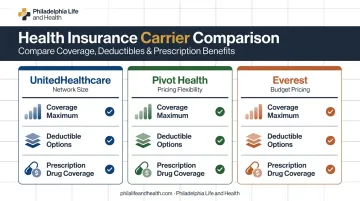
- UnitedHealthcare leads on network size, Pivot Health on pricing flexibility, Everest on budget
- Plan availability varies by state — Pennsylvania allows these plans, New Jersey doesn't
- An independent advisor like Philadelphia Life and Health compares carriers instead of pushing one
What Is Short-Term Health Insurance?
Short-term health insurance, sometimes called STLDI (short-term, limited-duration insurance), is temporary medical coverage built to bridge gaps between other health plans. It sits outside the Affordable Care Act's rules entirely, which means no guaranteed issue and no required essential health benefits.
Duration Limits Are Shifting
Under the finalized 2024 federal rule, new short-term policies sold after September 1, 2024 face strict caps. They can last no more than 3 months initially, with a total duration of 4 months including renewals, according to the Federal Register's 2024 final rule.
Here's where it gets murky: in August 2025, federal regulators announced they won't prioritize enforcement of that 4-month cap while new rulemaking is pending. That doesn't mean the rule disappeared; it means the ground is shifting.
Always confirm current limits with a licensed agent before you buy. Carrier and state practices may not match the letter of the rule yet.
Medical Underwriting Changes the Math
Unlike ACA plans, short-term insurance uses medical underwriting. That means:
- Applicants answer health questions before approval
- Pre-existing conditions are typically excluded from coverage
- Some applicants can be denied outright based on health history
This is the trade-off for lower premiums — insurers manage their risk by screening who gets in and what gets covered.
Best Short-Term Health Insurance Companies
We evaluated carriers based on cost, coverage maximums, deductible flexibility, prescription drug benefits, and provider network size. Three names consistently rise to the top.
UnitedHealthcare
UnitedHealthcare (sold through Golden Rule Insurance Company) is the heavyweight of short-term insurance. Its provider network is enormous, which matters if you don't want to hunt for an in-network doctor mid-gap.
A 2025 PA-eligible Golden Rule plan brochure lists a network of 1.8 million physicians and health professionals and 7,200 hospitals and medical facilities, one of the largest footprints in the short-term space. It also offers multiple deductible tiers, so you're not stuck with a one-size-fits-all plan.
| Feature | Details |
|---|---|
| Coverage Maximum | Up to $2 million per person per term |
| Deductible Options | $2,500, $5,000, $7,500, $10,000, or $15,000 |
| Prescription Drug Coverage | Tier 1 drugs: $25 copay, no deductible; Tiers 2-4 vary by plan (20%-30% coinsurance after deductible, with plan maximums between $2,500 and $5,000) |
Pivot Health
Pivot Health built its reputation on flexibility. It sells short-term plans across multiple product lines: Economy, Choice, Standard, and Deluxe under its Classic lineup, plus EPIC PPO and EPIC 0% under its newer Epic lineup.
The standout feature: Pivot's 0% coinsurance option, meaning once you hit your deductible, the plan pays 100% of covered costs. Approval also tends to move fast, and unlike some competitors, Pivot offers optional prescription drug coverage on several tiers.
| Feature | Details |
|---|---|
| Coverage Maximum | $100,000 to $1 million (Classic tiers); $250,000 to $1 million (Epic tiers) |
| Deductible Options | $1,000-$10,000 (Classic); $2,500-$10,000 (Epic) |
| Prescription Drug Coverage | Standard/Deluxe: $10 generic, $30 preferred, $75 non-preferred; Epic options run $5-$75 depending on tier |
One note for Pennsylvania shoppers: Pivot's Epic brochure states its general schedule excludes PA, with separate individual plan documents applying instead. An advisor can confirm which version actually applies to you.
Everest
Everest is the budget play. It's built for people who want the lowest possible premium and are comfortable with fewer bells and whistles.
Everest offers a range of coinsurance and coverage maximum combinations (more than most competitors), letting you dial in exactly how much risk you're willing to carry in exchange for a lower monthly bill.
| Feature | Details |
|---|---|
| Coverage Maximum | Multiple maximum options available (specific tiers vary by state) |
| Deductible Options | Multiple deductible choices offered |
| Prescription Drug Coverage | Covered only during an inpatient hospital stay — no standalone outpatient prescription benefit |
One important caveat: Everest's current availability list centers on states like Delaware, Florida, and Arizona rather than Pennsylvania or New Jersey. If you're in the Philadelphia area, confirm availability before assuming Everest is on the table.
How to Choose the Best Short-Term Health Insurance Plan for You
Most shoppers make the same mistake: they pick the plan with the lowest monthly premium and stop there. That's how people end up with a $50/month plan and a $10,000 surprise bill.
Look Past the Premium
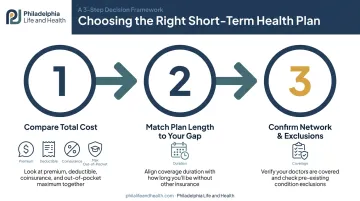
Compare the total potential cost, not just the sticker price:
- Premium (what you pay monthly, guaranteed)
- Deductible (what you pay before coverage kicks in)
- Coinsurance (your share of costs after the deductible)
- Out-of-pocket maximum (the ceiling on what you'll pay in a worst case)
A plan with a low premium and a $15,000 deductible could cost you far more than a slightly pricier plan with a $2,500 deductible, if you actually need care.
Match the Plan Length to Your Gap
Short-term plans are capped at a federally limited duration. Before you buy:
- Estimate your actual gap: is it 6 weeks, or 4 months?
- Check renewal availability: not every carrier allows it, and rules vary.
- Build in a buffer: picking a plan that's too short creates a second coverage gap later.
Confirm Your Network and Exclusions
A few more non-negotiables:
- Verify network status. Confirm your doctors and hospitals accept the plan. Short-term coverage can trigger balance billing for out-of-network care, sometimes at full retail rates.
- Check exclusions carefully. Maternity, mental health, prescriptions, and pre-existing conditions are commonly excluded, but the specifics differ significantly by carrier.
- Ask about prescription coverage separately. Many short-term plans exclude drug coverage entirely or cap it well below what ACA plans provide.
For context, eHealth's 2018 Value, Benefits, and Cost report found short-term premiums averaged $110 a month among its customers, versus $378 for unsubsidized ACA plans. That's an older, single-source figure, but it illustrates why the savings are real, even as coverage stays thinner.
Plan design varies significantly from carrier to carrier. Working with an independent advisor licensed across multiple companies, like Philadelphia Life and Health, means you're comparing real options rather than one company's sales pitch.
Short-Term Health Insurance Rules in Pennsylvania, New Jersey & Delaware
Short-term insurance rules aren't national. They're set state by state, and the differences between neighboring states are stark.
- Pennsylvania permits short-term coverage. The PA Insurance Department publishes consumer guidance on these plans but imposes no separate duration cap beyond federal limits.
- New Jersey prohibits the sale of individual short-term health plans entirely. If you live in NJ, your options run through the ACA marketplace or health-sharing arrangements instead.
- Delaware allows short-term plans but caps total duration at 3 months, with no back-to-back extensions from the same insurer. Timeline planning matters here more than in PA.
If you're anywhere in this tri-state area, the rules that apply to your neighbor may not apply to you. Philadelphia Life and Health is licensed in all 50 states, with offices in Philadelphia and East Norriton, PA. The team helps residents across PA, NJ, and DE figure out what's actually available before they apply.
Conclusion
Short-term health insurance can be a smart, low-cost bridge for healthy people facing a temporary gap. It's not a substitute for comprehensive coverage, and it's not the right call for everyone, especially anyone managing an ongoing health condition.
Before enrolling, weigh your health needs, your timeline, and your state's rules. Don't choose based on premium price alone.
If you're not sure where to start, Philadelphia Life and Health's local, independent advisors offer a free, no-obligation comparison of short-term and long-term coverage options suited to your situation. Reach out at (215) 544-5432 or info@philalifeandhealth.com to talk it through.
Frequently Asked Questions
What is the best short-term medical insurance?
The best plan depends on your priorities. UnitedHealthcare leads on network size, Pivot Health offers flexible tiers and low-coinsurance options, and Everest wins on budget pricing.
What is short-term health insurance?
It's temporary, non-ACA-compliant coverage designed to bridge gaps between health plans, typically for a few months while you wait for new coverage to start.
How much does short-term health insurance cost?
Costs vary by age, location, and coverage level, but average monthly premiums are typically well below unsubsidized ACA plan costs.
What does short-term health insurance not cover?
These plans commonly exclude pre-existing conditions, maternity care, mental health services, and often prescription drugs outside of hospitalization.
Is short-term health insurance available in Pennsylvania, New Jersey, and Delaware?
Pennsylvania and Delaware currently allow short-term plans, with Delaware capping total duration at 3 months. New Jersey prohibits their sale entirely.
Can I renew my short-term health insurance plan?
Current federal rules limit renewals to a maximum total duration, and availability varies by carrier and state — check before assuming you can extend.